


The Costa Rica Ministry of Health (MOH) reports a chikungunya outbreak in different sectors of the Pavas district in San José.
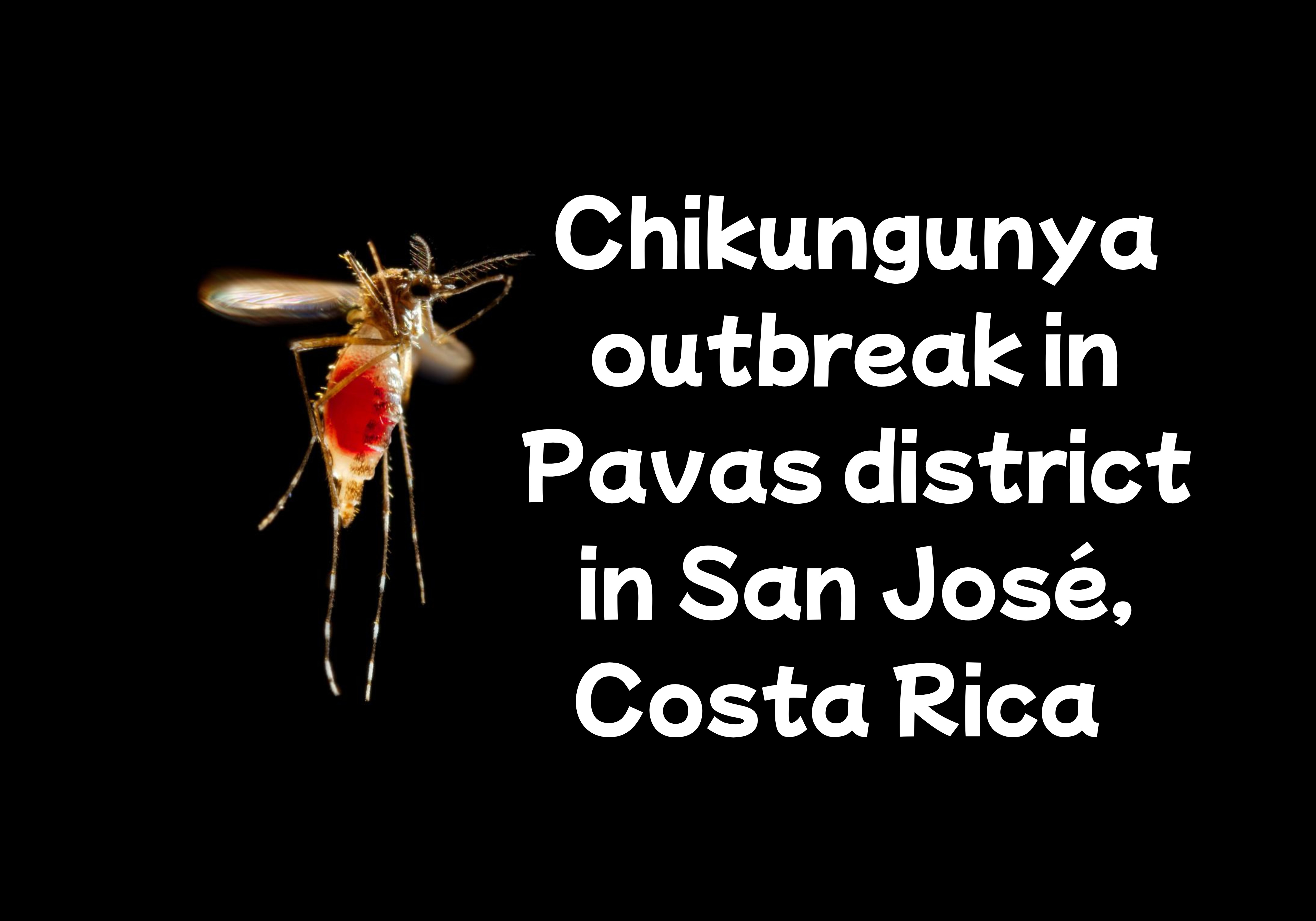
To date, 22 people have been tested in laboratory tests conducted by the Costa Rican Institute for Research and Teaching in Nutrition and Health (INCIENSA). Of these, 12 cases were confirmed, three remain probable, three are pending, and four were ruled out. All of these cases are linked to the outbreak identified in the community.
Chikungunya epidemic risk: A call to action
The cases are concentrated in the Villa Esperanza, Finca San Juan, Laureles, Pavas Centro, and Rohrmoser neighborhoods. The first cases identified were people with a history of travel to Nicaragua; however, local transmission of the virus has now been confirmed.
The MOH has responded reinforced epidemiological surveillance and vector control actions , with the aim of containing the transmission of the virus and protecting the health of people who reside, work or visit this community.
Specialized teams from the Ministry of Health have intensified vector control measures in the affected areas. These measures include interventions in homes using thermal foggers and high-powered LECO-type machines, as well as targeted interventions to identify and eliminate breeding sites of the transmitting mosquito during field inspections.
The Ministry of Health is calling on the residents of Pavas and surrounding communities to take extreme protective measures and eliminate any potential breeding grounds for the transmitting mosquito, both inside and around homes, workplaces, and other frequently used spaces. Likewise, the following is urged:
Use mosquito repellent that has been registered with the Ministry of Health. It is recommended to apply sunscreen first, and then the repellent.
Use mosquito nets, especially for people who are resting or during peak mosquito activity times.
Permanently eliminate containers and objects that can accumulate water, such as buckets, bottles, tires, cans, vases and other objects, as they can become breeding grounds for mosquitoes.
Keep water storage containers covered to prevent mosquitoes from laying their eggs.
Periodically check patios, gardens, water tanks, gutters, and other places where water can accumulate.
If a person presents symptoms such as high fever (greater than 39 °C), joint pain and swelling, headache, nausea or general malaise, it is recommended to go promptly to the nearest health facility to receive medical evaluation.
Chikungunya is a viral disease transmitted to humans through by mosquitoes infected with the chikungunya virus. The mosquitoes involved in transmission are Aedes aegypti and Aedes albopictus.
The most common symptom is an abrupt onset of fever, often accompanied by joint pain. Other symptoms include muscle pain, headache, nausea, fatigue, and rash. Severe joint pain usually lasts a few days but can persist for months or even years. Serious complications are uncommon, but atypical severe cases can cause long-term symptoms and even death, especially in older people and in children under one year old.