

Florida: 3rd Eastern Equine Encephalitis case of the year reported in Osceola County horse

The Florida Department of Agriculture and Consumer Services (FDACS) reports an additional case of Eastern Equine Encephalitis (EEE) in a horse in the state.
The case is a horse in a private facility in Osceola County.
This is the third EEE case of the year in Florida (Volusia, Seminole and Osceola).
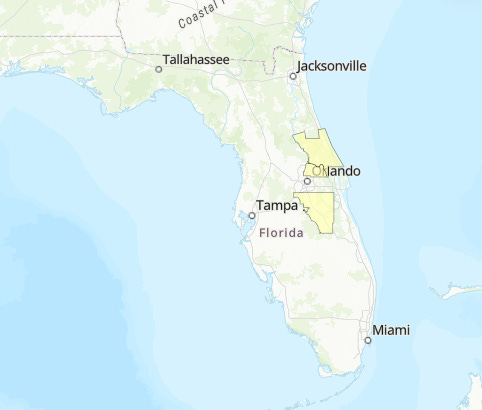
Eastern Equine Encephalitis is a viral disease that causes inflammation of the brain and spinal cord. It is transmitted by mosquitoes.
Mosquitoes become infected when they feed on infected birds, which circulate high levels of the virus in their blood for a period of time. Transmission to humans requires mosquito species capable of creating a “bridge” between infected birds and uninfected mammals. These mosquito species include some Aedes, Coquillettidia and Culex species.
Subscribe to Outbreak News TV on YouTube
Infected mosquitoes can then transmit the virus to humans and animals while biting to take a blood meal. The virus is located in the mosquito’s salivary glands. During blood feeding, the virus may be injected into humans or animals where it may multiply, causing illness.
The disease is not directly transmitted between horses, from birds to horses, or from horses to humans.

The incubation period for EEE is approximately one week. Early signs are generally subtle and are often undetected; they involve fever (mild or severe), depression, stiffness and lack of appetite. These signs may last up to five days during which viremia (presence of the virus in the blood) occurs. Signs of neurological disease usually follow.
Horses may become profoundly depressed (therefore the name “sleeping sickness”) or exhibit abnormal behavior such as propulsive walking, head-pressing, aggressiveness, circling or hyperexcitability. Some horses show signs of facial nerve dysfunction such as blindness, head tilt, and paralysis of the muscles of the face, mouth and throat. Some horses become comatose, seizure or die suddenly.
Equines infected with EEE may also show one or more of the following signs: fever, depression, loss of appetite, weakness, central nervous system disorders (lack of coordination, chewing movements, head pressing, “sawhorse” stance, circling, paddling motion of the limbs, and convulsions), irritability and aggressiveness toward handlers, blindness, excitability, and abnormal sensitivity to light and sound in some cases, although some horses infected with EEE may show no clinical signs before dying.
Diagnosis is made by a veterinarian by measuring titers in serum (a component of whole blood) using an ELISA (enzyme-linked immunosorbent assay) or, less commonly, with PCR or CSF (cerebrospinal fluid).
There is no cure for Eastern Equine Encephalitis. Supportive care is administered in horses which show clinical signs.
Vaccination for EEE is highly effective and is recommended as a core vaccination.