


The New York City Health Department in an update Friday, now reports 71 cases in the community cluster of Legionnaires' disease in the Upper East Side neighborhoods of Carnegie Hill and Yorkville (ZIP codes 10028, 10128, and 10075).
Earlier in the week, city health officials said new diagnoses had been slowing.
In addition, the first fatality was reported.
New York City’s Health Commissioner Dr. Alister F. Martin made the announcement on Friday evening.
Legionnaires’ disease: A personal story
“I am saddened to report that one person has died in connection with the Legionnaires’ disease community cluster on the Upper East Side,” he said.
Health officials are working to identify the origin of the Upper East Side outbreak, which was first identified on July 2 from two cases in close proximity. The investigation expanded to encompass three heavily residential ZIP codes.
The city said Tuesday it has inspected all 183 cooling towers in the area, and about 75 of them came up positive on first-round tests that don’t distinguish between live and dead bacteria.
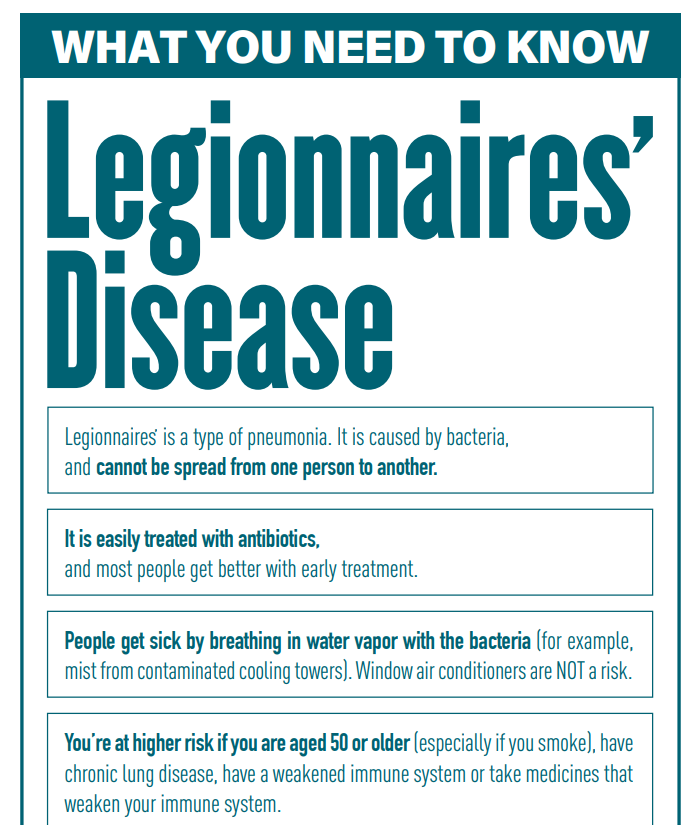
Legionnaires’ disease is a type of pneumonia caused by Legionella bacteria that grow in warm water. It causes flu-like symptoms, including fever, chills, muscle aches, cough, and shortness of breath. Legionnaires’ disease is treatable with antibiotics, but complications from the disease can be serious or fatal if left untreated.
You are at increased risk if you are 50 or older, smoke or vape, have a medical condition or take medicine that weakens your immune system, or have diabetes or a chronic heart, lung, kidney, or liver disease. Legionnaires’ disease in children and babies is extremely rare.
There is no vaccine or medicine you can take to prevent Legionnaires’ disease, but it can be treated with antibiotics.