


The Michigan Department of Health and Human Services (MDHHS) continues to see a sharp rise in cyclospora infection cases as officials report 4,312 total cases, including 102 requiring hospitalization for their illness, through July 16.
No deaths have been reported.
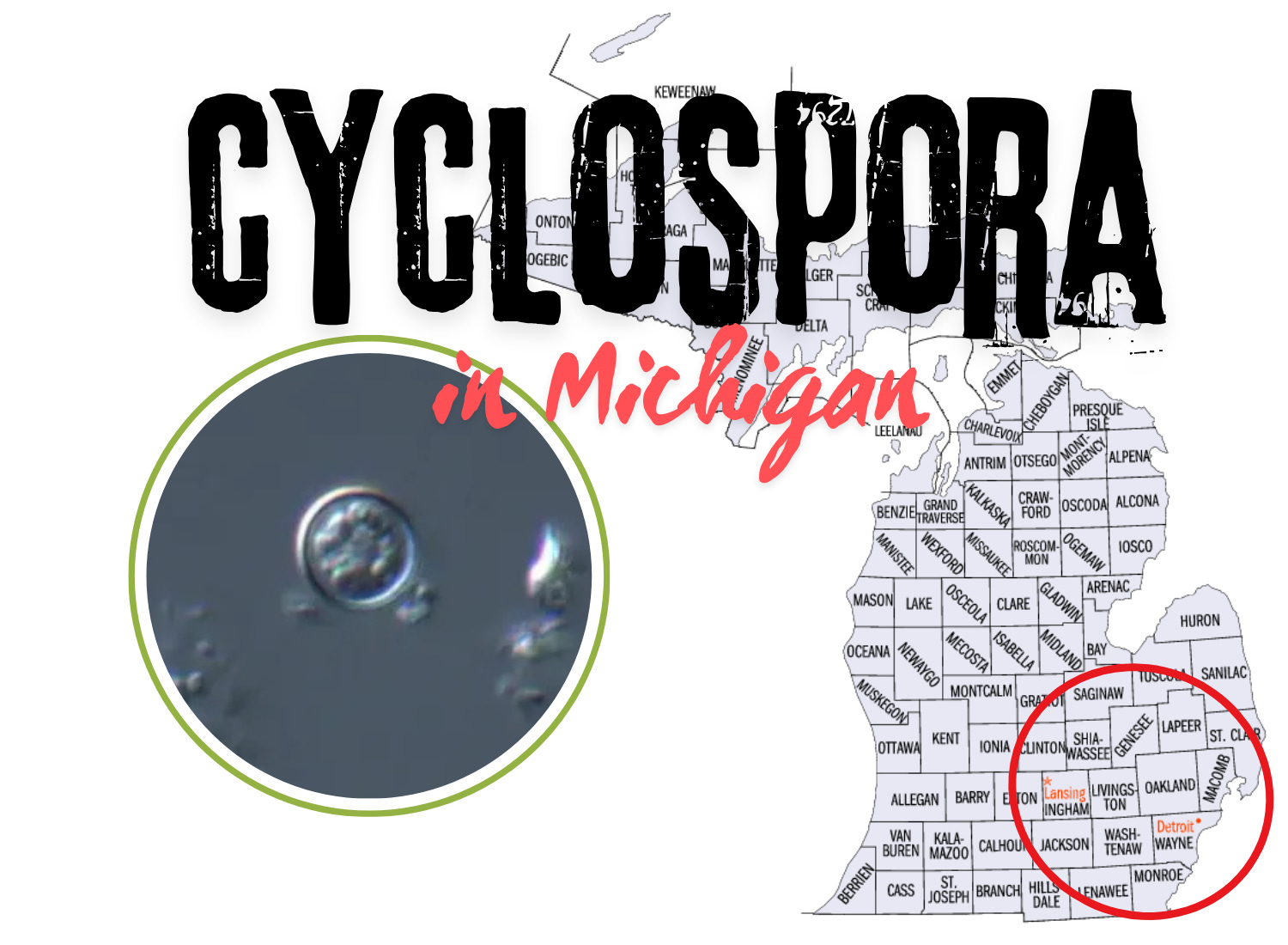
Counties reporting the most cases include Wayne (582), Washtenaw (474), Oakland (396) and Ingham (393).
MDHHS notes that while the investigation is ongoing, current results point to lettuce or salad greens as a potential source for this outbreak, although other food items cannot be completely ruled out. No specific type of produce, grower or supplier has been identified as the source.
Cyclospora is a parasite that infects the intestines and causes watery diarrhea, nausea, and stomach cramps. It is often contracted by eating or drinking something contaminated with the parasite. Typically, Michigan only records 40 to 50 cases of cyclosporiasis annually.
CDC HAN on cyclospora infections in the US
MDHHS offers the current recommendations for the public (noting that this is an active and evolving situation, these recommendations may change as more information becomes available):
Recommended actions for individuals who think they may have cyclosporiasis:
People experiencing gastrointestinal illness, such as sudden and ongoing diarrhea, are encouraged to contact their health care provider for testing and treatment. For general questions about the cyclosporiasis outbreak, contact your local health department. Cyclosporiasis is treated with antibiotics along with rest and drinking plenty of fluids to maintain hydration.
Listeria and the multi-state outbreak linked to Boar’s Head deli meat
Recommended practices for all individuals serving, preparing or consuming lettuce and salad greens in impacted counties:
Given early information from the investigation, MDHHS recommends the following lettuce and salad green safety measures:
Purchase whole heads: Buy whole heads of lettuce rather than pre-washed, bagged lettuce or pre-mixed salad kits.
Discard outer layers: Before preparation, remove and discard the outer two to three layers of leaves.
Wash inner leaves: Thoroughly wash the remaining inner leaves under clean running water.
Prioritize cooking: For greens that can be cooked, cooking to an internal temperature of at least 158°F (70°C) is the safest option. The parasite is resistant to routine chemical disinfection, and washing alone cannot guarantee removal.