


The Peru Ministry of Health reports an 86 percent decrease in dengue fever in 2025, recording 37,592 total cases year to date, down from 265,365 cases in 2024.
Dengue deaths are also down, from 54 cumulative deaths this year compared to 254 in 2024, or a 79 percent decrease in fatalities.
The department of San Martin has reported the most cases with 11,232, follwoed by Loreto (6,789), Cajamarca (6,330) and Amazonas (1,856).
Dengue is a complex disease transmitted by the bite of the Aedes aegypti mosquito , an insect that also transmits Zika and chikungunya. Its presence is common in hot, tropical areas, such as the northern coast and the rainforest.
If left untreated, dengue can be fatal or cause disability. Therefore, it is important to go to the nearest health facility if you experience any symptoms or suspect you may have the disease, in order to receive immediate care.
Vulnerable groups:
Pregnant women: Dengue during pregnancy increases the risk of complications for both the mother and the fetus.
Children under 1 year old: Their still developing immune system may have difficulty fighting the infection.
People aged 65 and over : A weakened immune system increases the risk of complications.
People with comorbid conditions: Those with diabetes, hypertension, kidney failure, obesity, or heart disease have a higher risk of serious complications.
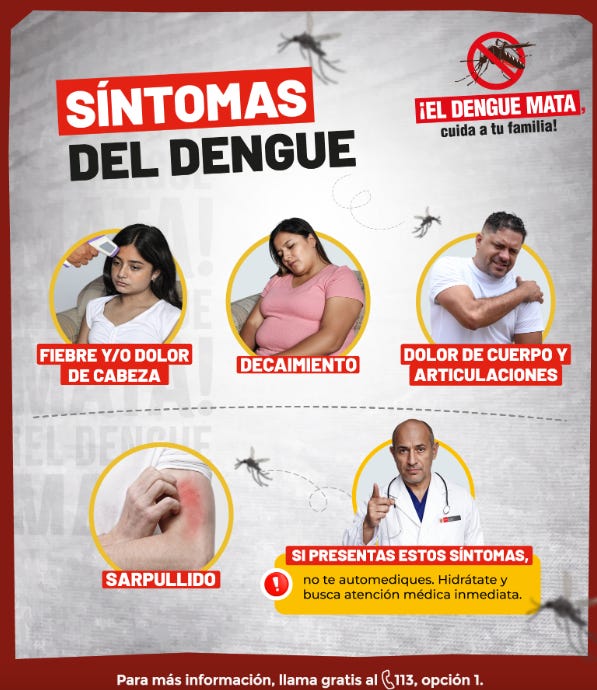
You will likely experience fever for 2 to 7 days , along with symptoms such as:
Joint pain.
Pain behind the eyes.
Muscle pain.
Headache.
Skin eruption or rash.
Nausea or vomiting.
In these cases, you can take care of yourself at home with adequate hydration, fever control, rest, and outpatient medical follow-up at the nearest health facility.
With warning signs
After the fever subsides, you might experience the following in the next few hours:
Intense and persistent abdominal pain.
Persistent vomiting (3 or more in 6 hours).
Bleeding from mucous membranes, nose and gums.
Drowsiness or irritability.
Decay.
At this point, strict monitoring and immediate intervention in a hospital or a UVICLIN (Clinical Surveillance Unit) are crucial for the care of patients with dengue and warning signs.
In its most serious form
The disease may manifest itself with:
Difficulty breathing.
Serious organ complications.
Severe bleeding.
In these cases, strict monitoring and hospitalization in an Intensive Care Unit (ICU) are required.