


Health authoroties in Rhode Island report a confirmed case of the tick-borne Powassan virus disease (Powassan) detected in a Rhode Island resident. This resident is a male in his 60s who lives in Washington County. He began experiencing symptoms of Powassan in late August.
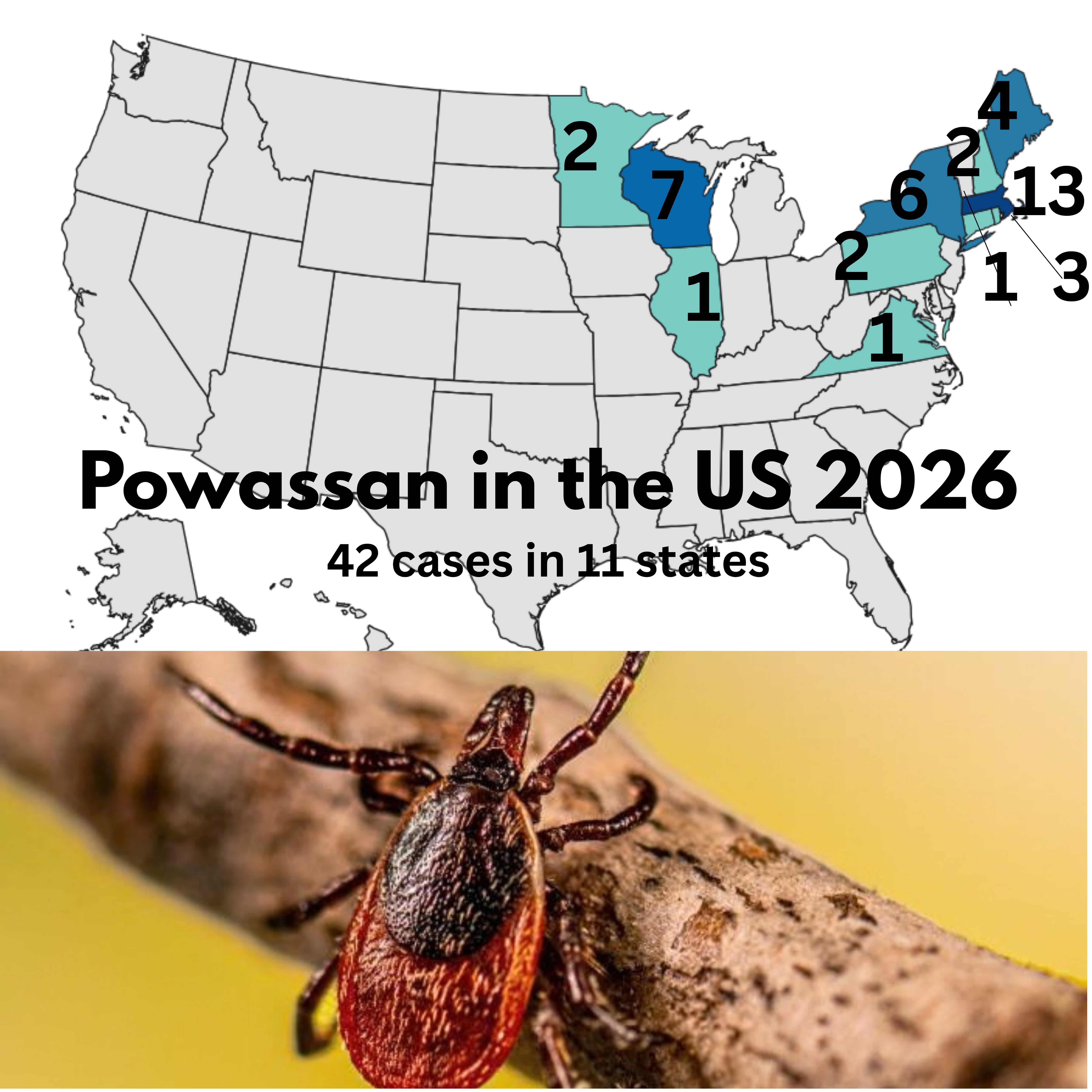
This is Rhode Island’s third case of Powassan in 2026 and the eleventh case overall since it was first reported in Rhode Island in 2016.
Powassan is a tick-borne disease that is found mostly in the Northeast and the Great Lakes region of the United States and in eastern Canada.
In 2026, 42 total Powassan cases have been reported in the United States this year from 11 states, with 39 being neuroinvasive disease.
Initial symptoms of Powassan include fever, headache, vomiting, and generalized weakness. The disease usually progresses to meningoencephalitis, which may include meningeal signs, altered mental status, seizures, aphasia (difficulty understanding or speaking), paresis (muscular weakness or paralysis), movement disorders, or cranial nerve palsies. People with severe Powassan disease often need to be hospitalized. There is no vaccine or treatment for Powassan, so preventing exposure to ticks is the best strategy to avoid this disease.
Unlike Lyme disease, which requires a tick to be attached for 24 to 48 hours to transmit, Powassan virus can be transmitted within just 15 to 30 minutes of a tick bite