


The Taiwan Centers for Disease Control (CDC) announced Saturday of the first locally acquired dengue fever case in Taiwan in 2026.
The case involves a man in his 60s residing in Qianzhen District, Kaohsiung City. On May 23, he sought medical attention at a clinic due to symptoms such as fever, headache, and muscle aches. Dengue fever was initially suspected, and he tested positive for NS1 rapid test and PCR, confirming his infection with dengue type 1.
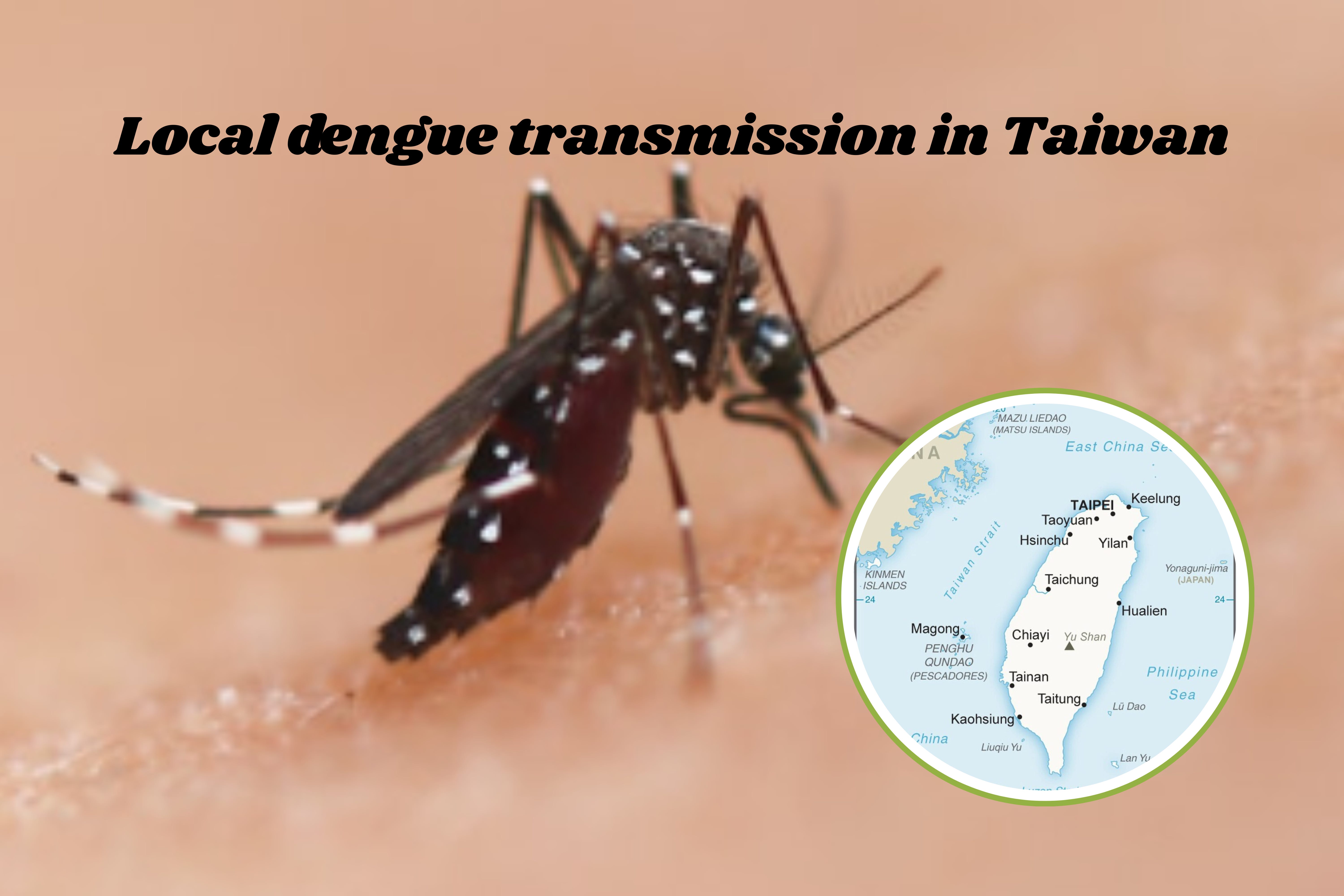
The CDC stated that the case's activities were mainly concentrated at his residence and workplace in Qianzhen District, and he had no history of overseas travel during the incubation period, leading to the assessment that this is a locally acquired case.
According to the CDC, as of now, there have been a total of 64 confirmed dengue fever cases in Taiwan this year. One case was locally transmitted, while the other 63 were imported from Southeast and South Asian countries, primarily Indonesia (19 cases), followed by the Maldives (14 cases) and Vietnam (8 cases). This number is comparable to the same period last year (2025) with 68 cases.
Subscribe to Outbreak News TV on YouTube
Neighboring Asian countries such as Malaysia, Vietnam, and East Timor have also recently experienced an increase in cases. Furthermore, countries including Vietnam, Sri Lanka, Cambodia, and Laos have already seen higher case numbers this year than the same period last year. With rising temperatures and the approaching rainy season, the epidemic is expected to continue to rise.
The CDC reminds the public that with the weather getting hotter and rainfall occurring across the country, they are urged to implement the "inspect, empty, clean, and scrub" campaign to strengthen the cleanliness of their homes and surrounding environments and eliminate breeding grounds to reduce mosquito density.
When outdoors, please wear light-colored long-sleeved clothing and use government-approved mosquito repellents.
If you experience symptoms resembling dengue fever, such as fever, headache, retro-orbital pain, muscle and joint pain, or rash, seek medical attention immediately and inform the doctor of your travel history.
Medical institutions are also urged to be vigilant and strengthen their inquiries about the TOCC (travel, occupation, contact, and cluster history) of patients.
The dengue NS1 rapid test kit can be used to assist in diagnosis and early reporting to facilitate prevention and control efforts by health authorities.