


The Thailand Department of Disease Control warns that hand, foot, and mouth disease (HFMD) is common in young children, especially during the rainy season and the start of the school year. The number of cases is likely to increase, and outbreaks may occur in educational institutions. Therefore, schools, childcare centers, and daycare facilities are urged to increase the vigilance in screening and monitoring children's symptoms continuously. Parents should also closely observe their children for symptoms such as fever, sore mouth, mouth sores, and rashes or blisters on the hands and feet. Children should stay home from school and see a doctor for proper diagnosis and treatment.
On September 4, 2026, Dr. Montien Kanasawasdi, Director-General of the Department of Disease Control, stated that hand, foot, and mouth disease (HFMD) remains a disease requiring close monitoring among young children. During the rainy season, the number of cases tends to increase, often resulting in outbreaks in schools and childcare centers in many areas. This is because children have close contact through activities and share objects, increasing the likelihood of disease transmission. Therefore, cooperation from educational institutions and parents is requested in closely monitoring the situation and strictly adhering to disease prevention and control measures.
Regarding the HFMD situation, data from the Digital Disease Surveillance System (DDS) of the Epidemiology Division, from January 1 to September 1, 2026, shows a cumulative total of 53,362 cases and 1 death, with a mortality rate of 0.002 per 100,000 population. The top three age groups with the highest number of cases are 0-4 years, followed by 5-9 years and 10-14 years, respectively. A total of 5,408 patients required hospitalization. Overall, the number of HFMD cases in 2026 remains lower than the previous year.
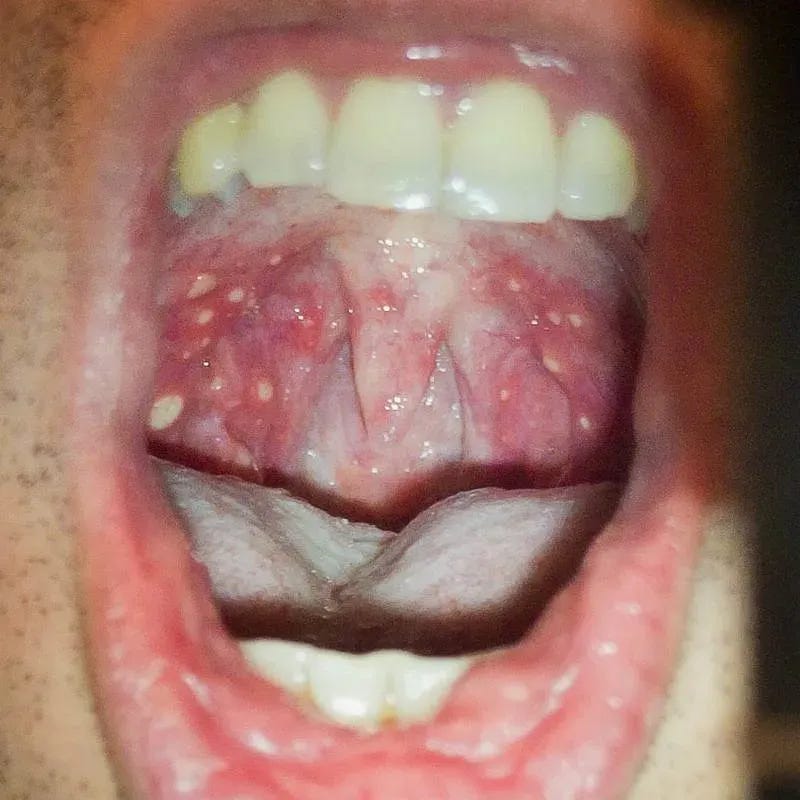
Dr. Montien further explained that the main symptoms of hand, foot, and mouth disease include fever accompanied by sores or red blisters in the mouth, such as on the tongue, palate, or cheeks; and rashes or clear blisters on the palms, soles, body, or buttocks. Young children may be irritable, refuse to eat or drink, drool, or complain of mouth pain. Parents should closely observe their children for symptoms, especially before taking them to school or daycare. If these symptoms are observed, suspect that the child may have hand, foot, and mouth disease and take them to a doctor for diagnosis and treatment. Children should be kept at home to recover and should not be taken to school or other places with many children to prevent the spread of infection. If a child has severe symptoms, such as high fever, very little food and water intake, lethargy, seizures, excessive vomiting, or shortness of breath, they should be taken to a doctor immediately, as these symptoms may be warning signs of serious complications such as encephalitis or myocarditis, which can be life-threatening.
Dr. Direk Khamphaen, Deputy Director-General of the Department of Disease Control, provided the following recommendations for educational institutions and childcare centers : 1) Screen children daily before entering school, observing for symptoms such as fever, rashes, blisters, and sores or red bumps in the mouth. 2) If a child is found to be ill, immediately notify parents to pick the child up and take them to a doctor, and notify the local public health officials. If two or more children in the same classroom are diagnosed with hand, foot, and mouth disease within one week, the classroom must be closed for at least one day for cleaning and intensified screening of other children for another week. 3) Regularly clean classrooms, restrooms, toys, learning materials, and areas frequently used or touched by children using appropriate cleaning agents such as detergent, dishwashing liquid, soap, or diluted sodium hypochlorite (bleach) according to the concentration and ratio indicated on the product label, strictly following safety instructions. 4) Provide sufficient handwashing sinks and soap, and promote appropriate hygiene practices among children and caregivers, emphasizing proper handwashing with soap and water. Especially before eating and after using the toilet. 5) Do not share personal items such as drinking glasses, spoons, handkerchiefs, hand towels, or bath towels. 6) Continuously monitor and track the situation. If multiple children are found to be ill or if a cluster of illnesses is found within the educational institution, coordinate with the local public health agency to assess the situation, investigate the disease, and implement appropriate disease control measures as soon as possible. For parents, please observe your children’s symptoms carefully. If you find that they have a fever accompanied by a sore mouth, sores or red blisters in the mouth, have difficulty eating or drinking, or have a rash or clear blisters on their hands, feet, around their buttocks, or other areas of the body, keep the child at home and take them to a doctor. Children who are sick should stay home from school for 5 working days or until they are fully recovered. They should not be taken to school or places where children are gathered together to prevent the spread of infection to others.
The Department of Disease Control requests the cooperation of educational institutions, parents, teachers, and caregivers in continuously monitoring and preventing hand, foot, and mouth disease. This includes regularly screening and observing children for symptoms, promoting good hygiene, especially frequent handwashing with soap and water, and regularly cleaning shared items and areas. If a child is found to be ill, they should be isolated from their group and kept home from school until their symptoms improve. If a child has severe symptoms, they should be taken to a doctor immediately to reduce the risk of serious complications, minimize the chance of transmission, and prevent outbreaks in educational institutions. For further information, please contact the Department of Disease Control hotline at 1422.