


In a follow-up on the typhoid cluster in Tonga, the Ministry of Health has reported three confirmed typhoid fever cases, all linked to the village of Hofoa, where 43 contacts have been identified and placed under monitoring as of February 6.
All cases have been investigated through active field surveillance, household assessments, and stool sample testing, with contacts remaining asymptomatic and under close follow‑up.
In response, the Ministry of Health has implemented Hofoa‑specific restrictions from 27 January to 27 March 2026, including a ban on all food‑related gatherings and kava events, alongside intensified sanitation checks and water safety measures.
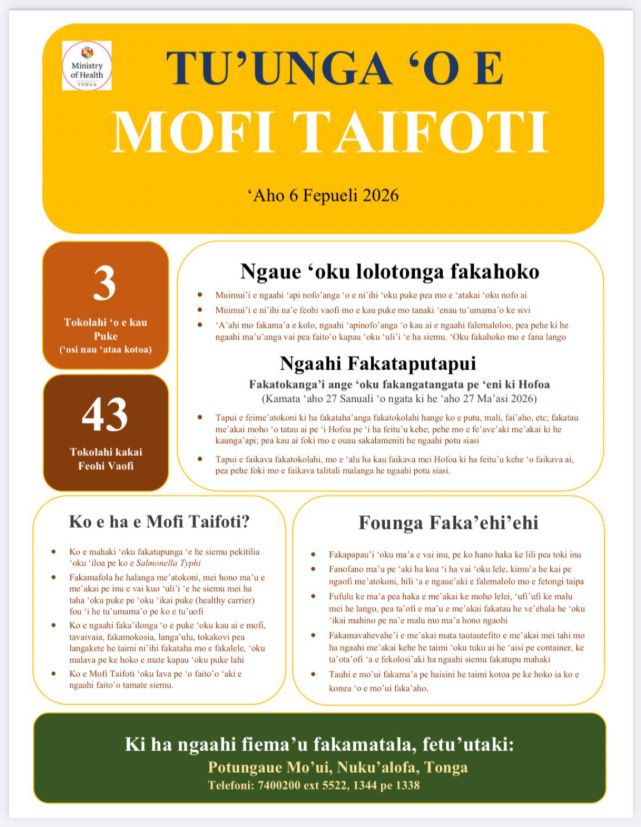
Typhoid fever is a serious disease caused by Salmonella Typhi (Typhi) bacteria. The bacteria spread through contaminated food and water and person-to-person contact.
Subscribe to Outbreak News TV on YouTube
Symptoms of typhoid fever include high fever, weakness, stomach pain, headache, constipation or diarrhea, cough, and loss of appetite. Typhoid fever can be fatal without appropriate antibiotic treatment.
Typhoid risk is higher in populations that lack access to safe water and adequate sanitation, and children are at highest risk.
Typhoid fever is common in places with poor sanitation and a lack of safe drinking water. Access to safe water and adequate sanitation, hygiene among food handlers and typhoid vaccination are all effective in preventing typhoid fever.
The public is advised to remain calm and continue practising good hygiene and food safety, including drinking safe or boiled water and washing hands regularly.